Addiction Recovery Course for Families: Why You Need Your Own Path
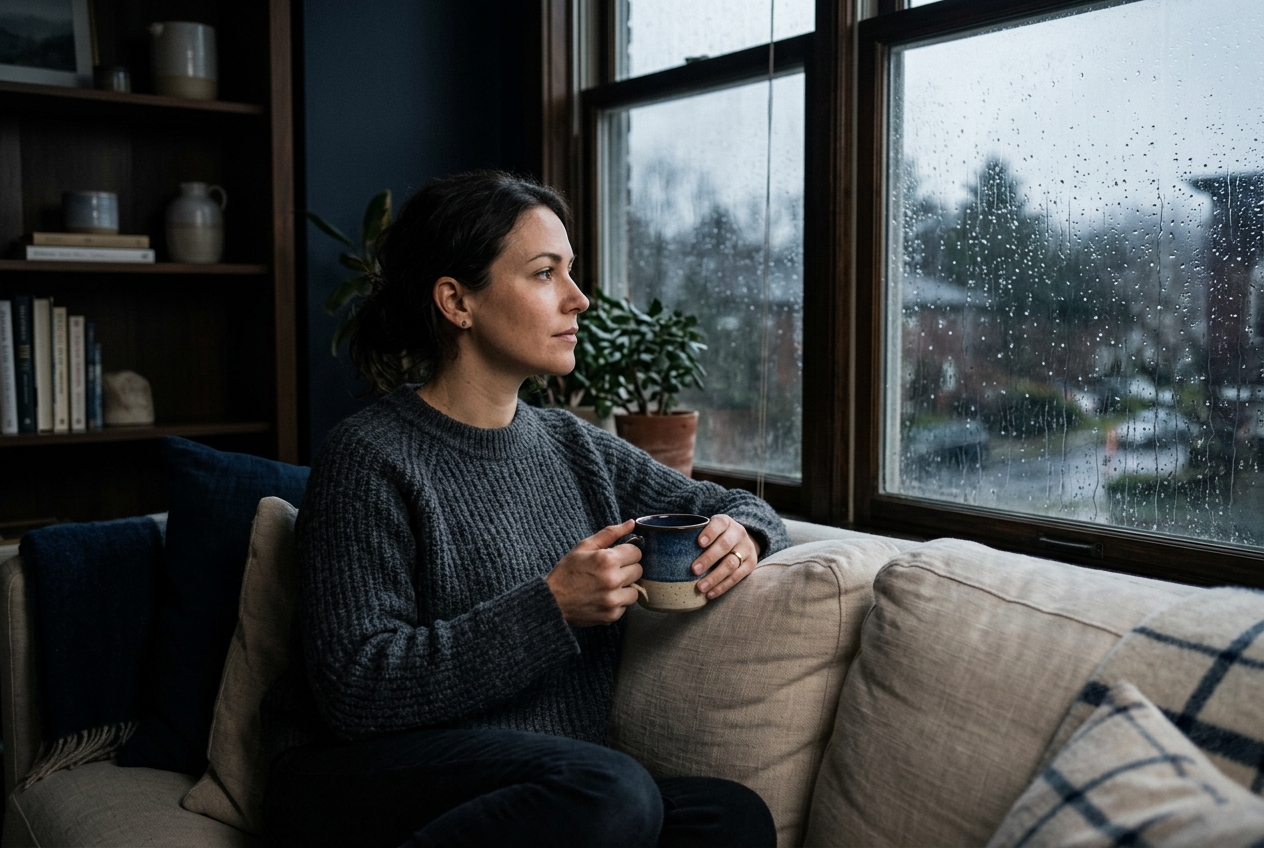
You've spent years watching, managing, fixing, hoping. Now he's finally getting help. So why do you still feel like you're drowning?
You are not the support act
When someone we love starts a recovery programme, it is tempting to think our job is simply to stand behind them. Cheer them on. Keep the house calm. Wait.
But you have been shaped by years of living alongside addiction, just as much as they have been shaped by using. The hypervigilance. The lying awake checking your phone. The learned habit of managing everyone's feelings but your own. That does not disappear because someone else got sober.
This is why an addiction recovery course for families is not a nice extra. It is not the softer, optional version of the real programme. It is its own piece of work, because you have your own wounds to bring to Christ, not just theirs.
What codependency actually means (without the jargon)
Codependency gets thrown around a lot, and it can sound like blame. It is not blame. It is a description of a pattern that almost every family member of an addict falls into, because it is a natural human response to chaos.
In plain terms, codependency is this: your sense of peace has become tied to their behaviour. If they are doing well, you can breathe. If they are struggling, you cannot function. You have quietly taken responsibility for feelings and choices that were never yours to carry.
It shows up as:
- Checking on them constantly, even when you know it will not change anything
- Making excuses for them to your children, your parents, your boss
- Feeling guilty for wanting a night out, a hobby, a friendship of your own
- Believing that if you just loved them better, prayed harder, managed things more carefully, they would stop
None of that makes you weak. It makes you human. But it is exhausting, and it is not sustainable, and it is not actually love in its healthiest form.
"Cast all your anxiety on him because he cares for you." (1 Peter 5:7)
That verse is not just for the addict. It is for you. You were never meant to carry this alone, and you were never meant to carry it at all. It belongs to God, not to your shoulders.
Why the family course runs week by week alongside the addict's course
At CFR, our Walking It Out family course runs on the same eight-week structure as the addict's course, week for week. That is deliberate.
Here is why. In week three, your husband might be facing honesty and confession for the first time in years. If you are doing your own week three work at the same time, on setting boundaries and grieving what addiction has cost you, you are not blindsided by what is happening in him. You understand the terrain, because you are walking your own version of it.
It also protects you both from an old, dangerous pattern: you waiting outside his recovery, watching for signs he is doing it right, ready to step back in and manage things if he wobbles. Parallel courses mean parallel growth. He is doing his work. You are doing yours. Neither of you is responsible for the other's healing.
This matters for marriages especially. Our Still Standing course is built specifically for spouses and partners who need somewhere to be honest about the loneliness, the broken trust, and the question nobody says out loud: do I stay?
What actually changes when the family stops carrying the addiction
Something shifts, often within a few weeks, when a family member genuinely puts the addiction down. Not stops caring. Puts down the carrying.
Practically, it looks like this:
- You stop checking his phone, his bank statements, his breath, several times a day
- You start saying what you mean, even when it is uncomfortable, instead of managing his mood
- You let natural consequences happen instead of softening every landing
- You rebuild a life that has content in it beyond his sobriety: friendships, rest, your own faith, your own hobbies
- You grieve, properly, the years and trust that addiction has taken, instead of pushing straight past it into forced forgiveness
Here is the surprising part. This often helps the addict too. When you stop absorbing the consequences of their choices, reality has room to do its work. Recovery becomes theirs to own, not something you are propping up from behind the scenes.
That does not mean withdrawing love. It means loving from a place that is not soaked in fear and control.
What if you are also parenting through this
If there are children in the house, they are watching all of this closely, even the parts you think you are hiding well. Our Little Hearts, Growing Hearts, and Young Hearts courses give age-appropriate support for children aged 5 to 17 living with a parent's addiction, so they are not left to make sense of it alone.
And if you are the adult child of an addict, still carrying patterns from your own childhood, The Weight You Grew Up With is built for exactly that.
What if you are past the first eight weeks
Recovery does not finish at week eight, for either of you. If your spouse is moving into Still Walking It Out, the seventeen-week course that follows, there is a companion course waiting for you too: Still Walking It Out for family. And for parents further down the road with an adult child in addiction, Still Watching the Road was written specifically for that long, quieter kind of grief.
Questions people ask
Do I really need my own course if he is doing his?
Yes. His course helps him face his addiction. Yours helps you face what living alongside addiction has done to you, and how to build a life and a marriage that is not organised around his using or his recovery. They are different work.
What if my spouse refuses to do a course at all?
You can still do yours. In fact it becomes even more important. You cannot make someone else get help, but you can stop the patterns that keep you stuck waiting for them to.
Is this going to make me look like I am the problem?
No. Working on your own patterns is not an admission that you caused the addiction. You did not. It is an acknowledgement that living with addiction changes anyone, and that healing is available to you as much as to them.
What if there is a risk of relapse or crisis right now?
If you are worried about immediate danger, overdose, or self-harm, please call 999 (or 911 in the US) straight away. Our help page and crisis resources have further support, and our relapse support page is there for the moments recovery gets shaky.
Where to go next
If you are not sure where to start, our 90-second quiz will point you to the right course for your situation. You can browse the full course library, see plans on pricing, or buy a single course directly at buy courses. If you want to understand the story behind CFR, read my own account on the founder story page.
You have carried enough for both of you. It is time to put some of it down.
— Pastor Simon
Pastor Simon
Christian Family Recovery Team - Supporting families through addiction recovery with faith and compassion
Walking It Out — for the family
The companion course for spouses, parents, siblings and friends. Runs week by week alongside the addict's course.