Christian Help for Porn Addiction: A Plan Beyond Willpower
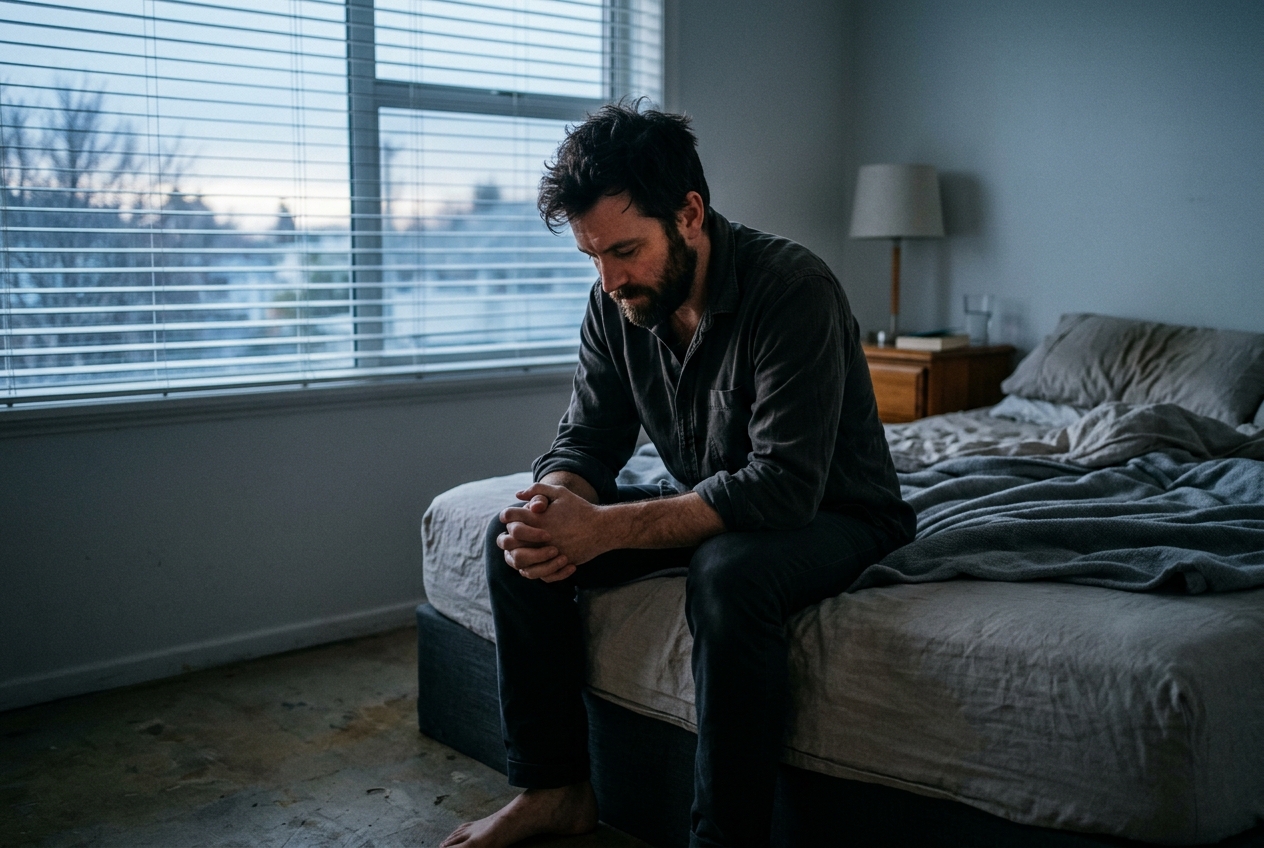
You've prayed. You've deleted the apps. You've promised God, your wife, yourself. And you're back here again, at 2am, hating what you just did. If that's you, I want to say something before anything else: trying harder was never going to fix this. Not because you're weak. Because willpower was the wrong tool for the job.
Why 'just try harder' doesn't work
I spent years believing that enough discipline, enough prayer, enough shame would eventually break the cycle. It didn't. What I didn't understand then is that porn addiction isn't primarily a willpower problem. It's a brain problem, a heart problem, and often a wound problem, all at once.
Here's the plain English version of the brain science. Every time you view porn, your brain releases dopamine, the chemical that says do that again. Over time, the brain adapts. It needs more, or more extreme content, to get the same hit. Meanwhile the pathway to that behaviour gets worn smooth, like a path across a field that's been walked so many times the grass never grows back. Willpower is trying to walk a new path through the long grass while exhausted, alone, usually late at night, usually after a hard day. It's not that you lack character. You're fighting biology with nothing but gritted teeth.
That's why white-knuckling it rarely lasts. You need a plan that addresses the trigger, the brain, and the soul, not just the moment of temptation.
What actually causes relapse: understanding your triggers
Almost nobody relapses out of nowhere. There's a pattern. Loneliness. Boredom. Stress. Conflict with your wife. Late nights scrolling. Shame from the last relapse driving you straight back to the thing that gave the shame in the first place.
Start tracking, honestly, on paper if you have to:
- What time of day do you struggle most?
- What had you just felt, before the urge hit? Rejected, bored, angry, unseen?
- Where were you? Phone in bed, alone in the house, after an argument?
- What did you tell yourself right before? "Just this once", "nobody will know", "I deserve this"?
You're not doing this to feel worse about yourself. You're doing it because you can't fight an enemy you haven't identified. Paul writes in 1 Corinthians 10:13, "No temptation has overtaken you that is not common to man. God is faithful, and he will not let you be tempted beyond your ability, but with the temptation he will also provide the way of escape." The way of escape is usually specific and practical, not abstract. If your trigger is your phone in bed at 11pm, the way of escape might be charging your phone in the kitchen.
Building a real plan, not just resolutions
A resolution says "I won't look at porn again." A plan says what you'll do differently at the exact moments you're vulnerable. Here's a starting structure:
- Remove access at the point of weakness. Filters, accountability software, phone out of the bedroom. This isn't distrust of yourself as a person, it's respect for how temptation actually works.
- Interrupt the pattern. When you notice the early signs (restlessness, scrolling, isolating), have a pre-decided action: call someone, go for a walk, pray out loud, do something physical.
- Deal with the underlying feeling. Porn is rarely just about sex. It's often about numbing loneliness, stress, anger, or emptiness. Ask what you were actually feeling in the hour before.
- Tell someone before, not just after. The people who recover well are the ones who reach out to a trusted person during the struggle, not just confessing after they've failed.
- Build a rhythm of confession and grace. Not once a year in a dramatic moment. Weekly, ordinary, unremarkable honesty with someone safe.
Why accountability alone isn't enough (and what it needs instead)
Accountability partners and apps have their place, but I've watched too many men treat accountability as a substitute for real change. An app that texts your wife when you visit a flagged site will slow you down. It won't heal you. It's a guardrail, not a cure.
What actually works is accountability inside a structure that also deals with the roots: shame, isolation, unprocessed pain, and a faith that's more than performance. That's the whole reason CFR built Walking It Out, an 8-week course that walks through exactly this, triggers, identity, grace, and practical rebuilding, alongside others who are doing the same work, not just an app pinging your accountability partner.
The shame trap, and what grace actually does
Here's the pattern I see constantly. Relapse happens. Shame floods in. Shame says you're disgusting, you'll never change, you might as well give in properly since you've already failed. And within hours, sometimes minutes, the person is back doing the very thing the shame was supposedly punishing them for.
Shame doesn't produce holiness. It produces hiding. Romans 8:1 says, "There is therefore now no condemnation for those who are in Christ Jesus." That's not permission to keep sinning. It's the only foundation strong enough to actually stop. You cannot fight from a place of condemnation. You can only fight from a place of belovedness.
This is the difference between guilt and shame. Guilt says "I did something wrong." Shame says "I am something wrong." Guilt can lead to genuine repentance and change. Shame just leads back to the same behaviour, because shame needs numbing too. Grace isn't the enemy of holiness. It's the only soil holiness grows in.
For the wife: what you're carrying too
If you're the wife reading this at 2am because you found something on his phone again, I want to speak to you directly for a moment. This isn't your fault. You didn't cause this by not being enough, not looking a certain way, not doing enough. Addiction has its own logic, separate from you.
You're allowed to feel betrayed, because you have been. You're allowed to need your own support, your own healing, your own pace of rebuilding trust that isn't dictated by his timeline of recovery. Trust is rebuilt through consistent, verifiable honesty over time, not through one tearful conversation.
CFR has a course built specifically for you, Still Standing, for spouses walking through a partner's addiction, and Walking It Out for Family, which runs alongside his course so you're both doing the work, separately and together.
When faith alone hasn't been enough
Some readers will have heard "just pray more" their whole Christian life, and it hasn't worked, and they've quietly concluded either God doesn't answer, or they're beyond help. Neither is true.
Prayer matters. But prayer plus practical structure, honest community, and understanding how temptation actually works in your brain and heart, that's what Scripture models anyway. Jesus told Peter to watch and pray so he wouldn't fall into temptation, not just pray. Watching means noticing your patterns. Praying means bringing them to God rather than hiding them.
Questions people ask
Is porn addiction a real addiction, or just a bad habit?
The brain changes involved (tolerance, craving, loss of control despite consequences) mirror substance addiction closely. Whether you call it addiction or compulsive behaviour, it responds to the same kind of treatment: structure, support, and dealing with root causes, not just self-discipline.
How do I tell my wife without destroying our marriage?
Honesty delivered with humility, ownership, and a concrete plan for change tends to land very differently from honesty delivered as confession-and-collapse, where she ends up comforting you. Consider having this conversation with a counsellor present, or after you've already started a recovery structure so you can show her a plan, not just an admission.
What if I relapse while doing everything right?
Relapse is common and doesn't mean the plan has failed or that you're beyond help. What matters is what you do in the hour after: honest confession to someone safe, not disappearing into shame, and reviewing what trigger caught you off guard. Recovery is rarely a straight line.
Can God really forgive this, again?
Yes. Not as a technicality, but because that's who he actually is. 1 John 1:9 says, "If we confess our sins, he is faithful and just to forgive us our sins and to cleanse us from all unrighteousness." Faithful, even the tenth time. Even the hundredth.
Where to go next
If tonight is a crisis moment and you need help right now, start at /help. If you're ready to build a real plan rather than another resolution, Walking It Out is an 8-week course designed for exactly this. Not sure where you fit? The 90-second quiz will point you the right direction. If you're a wife or partner, Still Standing was built for you. And if you want to see all the ways CFR can help, browse the full course list or check membership options.
You're not beyond help. You're not the only one. And you don't have to do this on white knuckles alone anymore.
— Pastor Simon
Pastor Simon
Christian Family Recovery Team - Supporting families through addiction recovery with faith and compassion
Walking It Out — the 8-week recovery course
Grace over guilt, week by week. Start free for 14 days.